Description
Exploring Tokyo’s Mysterious Underground
There’s a hidden world beneath Tokyo — not a subway or an ancient tunnel, but something out of a sci-fi epic. Fifty meters below the quiet streets of Saitama lies the Metropolitan Area Outer Underground Discharge Channel, known to locals as Shutoken Gaikaku Hosuiro. Built to protect Tokyo from floods, this colossal underground space has become one of Japan’s most intriguing offbeat attractions.
The flood control cathedral
The story begins with water. Each rainy season, rivers north of Tokyo swell and threaten to overflow. To prevent disaster, Japan constructed a vast underground network to catch and redirect floodwaters before they reach the city. The result is a 6.3-kilometer-long system of tunnels, connected by towering silos — each as wide as a Ferris wheel and as tall as a twenty-story building.
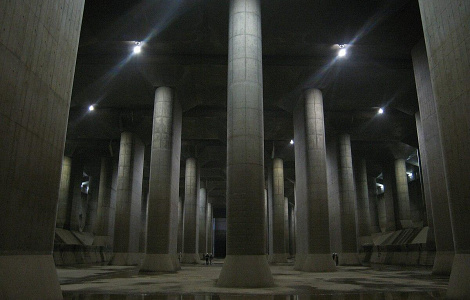
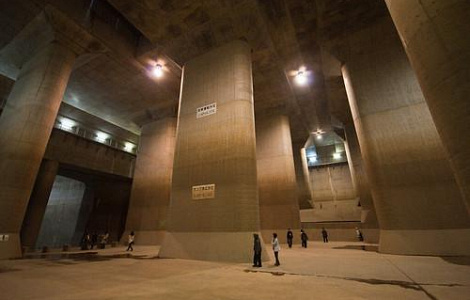
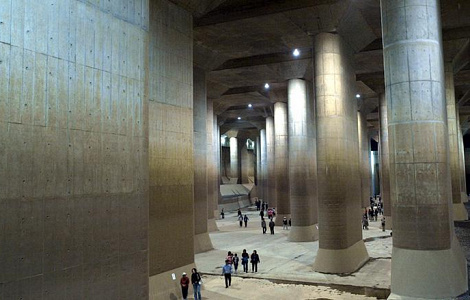
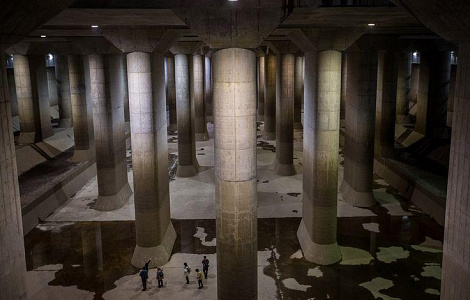
All that water eventually flows into a single pressure-control chamber, nicknamed the Underground Temple. The nickname fits: inside are fifty-nine massive concrete pillars, rising like stone giants from the floor to the vaulted ceiling. The space stretches 177 meters long and nearly 80 meters wide, and walking through it feels like stepping into another dimension — silent, echoing, and monumental.
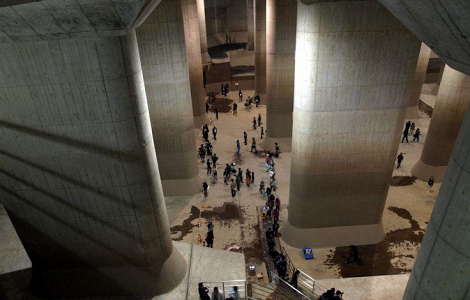
When not in use for flood control, this enormous chamber opens to the public for guided tours. Visitors descend stairways into the dimly lit space, their footsteps ringing off the walls, the air cool and slightly damp. It’s both functional and oddly spiritual — a cathedral built not for worship, but for safety.
Lights, camera, discharge channel
The sheer drama of the space has made it a magnet for filmmakers and designers. The Underground Temple’s cinematic symmetry once starred in a Land Rover commercial, where the vehicle drove between the concrete pillars like a hero entering a mythic underworld. Gamers may also find it familiar — the space inspired a level in the futuristic shooter Mirror’s Edge, among others. It’s also a popular backdrop for Japanese sci-fi dramas and music videos, drawn by its monumental beauty.
Even when empty, the site seems alive — water dripping faintly in the distance, faint light shafts catching dust motes, and the constant reminder that above you lies an entire city, unaware of the silent colossus below.
A family-friendly adventure underground
Visiting the facility is surprisingly easy. From Tokyo, you can reach Kasukabe in less than an hour by train. From there, local buses take you to the site’s visitor center, where you’ll find scale models and videos explaining how the flood system works. Tours are small, often guided in Japanese but easy to follow visually — and perfect for both adults and kids fascinated by how cities tame nature.
Just remember: the tunnels are real infrastructure, so visits are sometimes canceled during heavy rain. Still, on clear days, it’s one of the most unique experiences you can have near Tokyo — a chance to explore the quiet power beneath Japan’s most dynamic city.
Beneath the surface
The Metropolitan Area Outer Underground Discharge Channel isn’t just an engineering wonder; it’s a glimpse into Japan’s obsession with precision and preparedness. Standing under those towering pillars, you can’t help but feel a mix of awe and humility. Tokyo’s mysterious underground isn’t about what lies hidden — it’s about what keeps the city standing tall above.



 Top
Top